Hold the Grade Before You Build
Retaining wall installation for pool yards in Cincinnati that addresses sloped lots, drainage integration, and terraced backyard layouts.
Sloped yards in Cincinnati create challenges for pool installations, and attempting to build without addressing grade differences leads to erosion, drainage problems, and structural instability. Retaining walls hold back soil, create level areas for pools and patios, and direct water away from structures to prevent undermining. Paradise Pool Concepts designs and builds retaining walls that function as both structural support and design elements, using materials and reinforcement methods that handle local soil conditions and freeze-thaw cycles.
Retaining walls are built from stone, block, or poured concrete depending on the height and load requirements. Each wall includes drainage systems that prevent water from building up behind the structure, which would cause shifting or collapse over time. The layout is planned around the pool location, patio zones, and existing slopes, with terraced levels that create usable space and improve safety. Walls can also integrate seating areas, planters, or lighting to add function and visual interest to the yard.
If your yard has a slope or you are planning a pool installation on uneven ground, contact Paradise Pool Concepts for a site evaluation in Cincinnati.
What Keeps a Wall Standing Long-Term
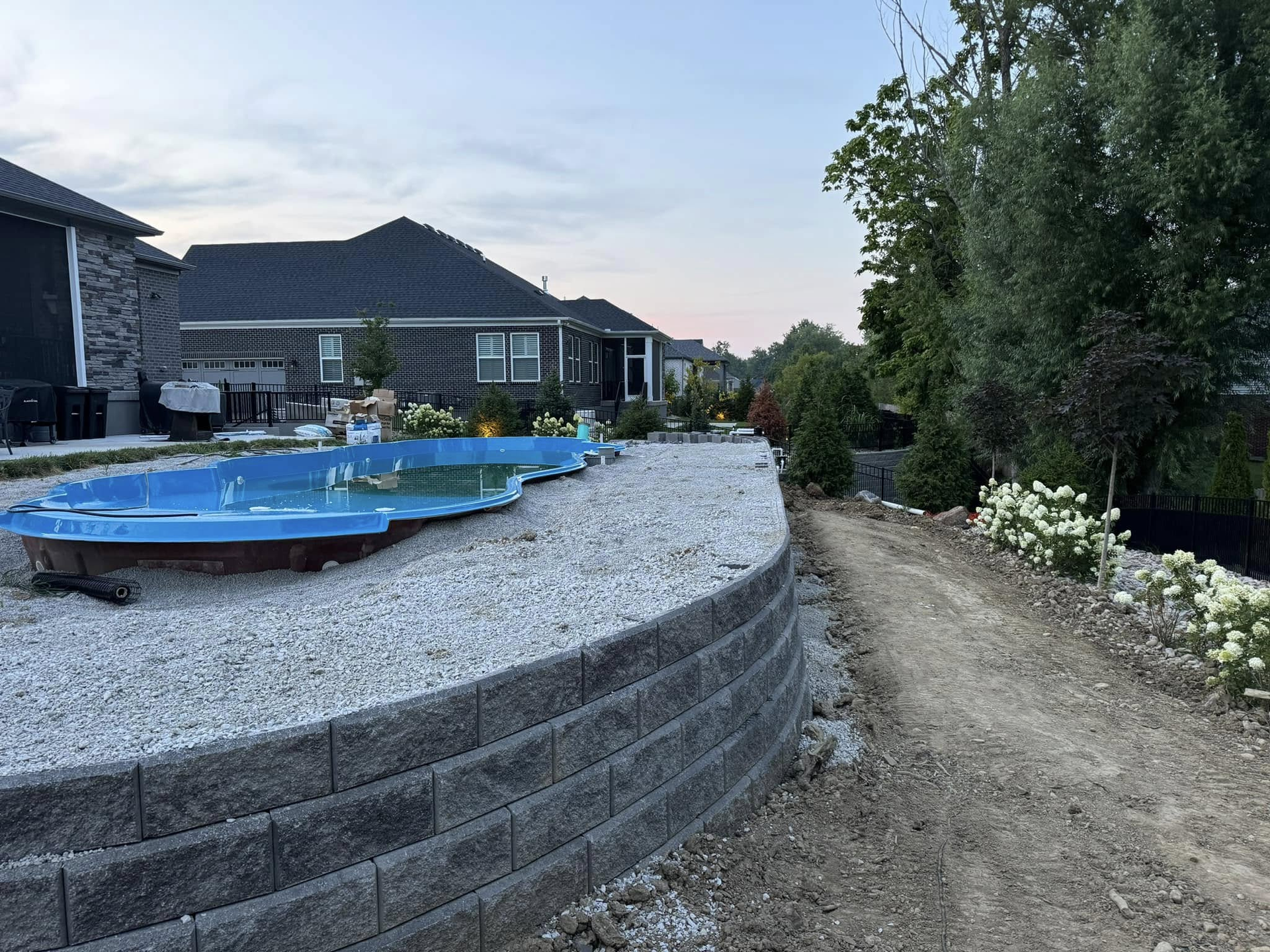
Retaining wall installation begins with excavating the wall footprint and preparing a stable base that extends below the frost line. A compacted gravel foundation is laid to prevent settling, and drainage pipe is installed behind the wall to direct water away from the structure. In Cincinnati, this drainage step is critical to prevent freeze-thaw damage and soil saturation that would push the wall forward. The wall is then built in courses, with each layer offset and secured using pins, adhesive, or mechanical fasteners depending on the material.
Once complete, you will see a stable wall that holds the grade without leaning or showing cracks, level terraces that support pools and patios, and drainage routes that move water away from the wall and yard. The wall remains secure through winter and does not require constant adjustment or reinforcement. Plantings and seating can be added along the top or in front of the wall to soften the appearance and integrate the structure into the yard layout.
The work includes backfilling with drainage material, compacting soil behind the wall, and capping the top course if desired. Retaining walls do not include landscaping, lighting, or pool installation unless specified. The finished wall creates the level foundation needed for pools, patios, and other backyard features on sloped Cincinnati lots.
Homeowners planning retaining walls often have questions about height limits, drainage, and how the wall affects the rest of the yard. These answers address the most common concerns that come up during site evaluations.
Retaining walls make sloped Cincinnati yards usable and safe for pools and outdoor living spaces. Paradise Pool Concepts designs walls that manage grade, drainage, and erosion using structural methods developed through excavation and site work across the region. Get in touch to schedule a site evaluation and discuss your retaining wall options.